




Best Proxy IPs for Cross-Border E-Commerce in 2026: 5 Providers



Clean IP picks: Static IPs from $1.5 each, Dynamic IPs from $0.5/GB


Cross-border e-commerce sellers handle a range of tasks, including price monitoring, inventory tracking, ad verification, and multi-store management. Proxy IPs are a common part of the network infrastructure used for these activities.
Different tasks require different IP features: data collection focuses more on IP pool size and rotation, while store operations place greater emphasis on fixed IPs, stability, and location.
This article compares five proxy providers for cross-border e-commerce based on IP types, use cases, and pricing models.
Why Do Cross-Border E-Commerce Sellers Need Proxy IPs?
Cross-border e-commerce operations typically involve several common use cases:
▸ Competitor Price Monitoring and Inventory Tracking: Access product prices, shipping costs, and inventory information by region.
▸ Ad Verification: Check how ads are displayed in different regions.
▸ Multi-Store and Multi-Account Management: Maintain relatively separate network environments.
▸ Overseas Market Research: Access localized pages and search results in target markets.
These use cases have different IP requirements, so price and IP pool size should not be the only factors considered when choosing a proxy.
How to Choose a Proxy IP for Cross-Border E-Commerce
One more thing:
Residential proxies are commonly used to simulate real-user network environments, while rotating residential proxies can rotate IPs by request or session.
Static residential and some ISP proxies, on the other hand, focus on maintaining a fixed IP for long-term use.
When choosing a proxy, it is worth checking the IP's ASN, ISP attribution, whether the IP is dedicated, and session stability instead of relying only on the product name.
5 Proxy Providers for Cross-Border E-Commerce in 2026
1. IPDeep
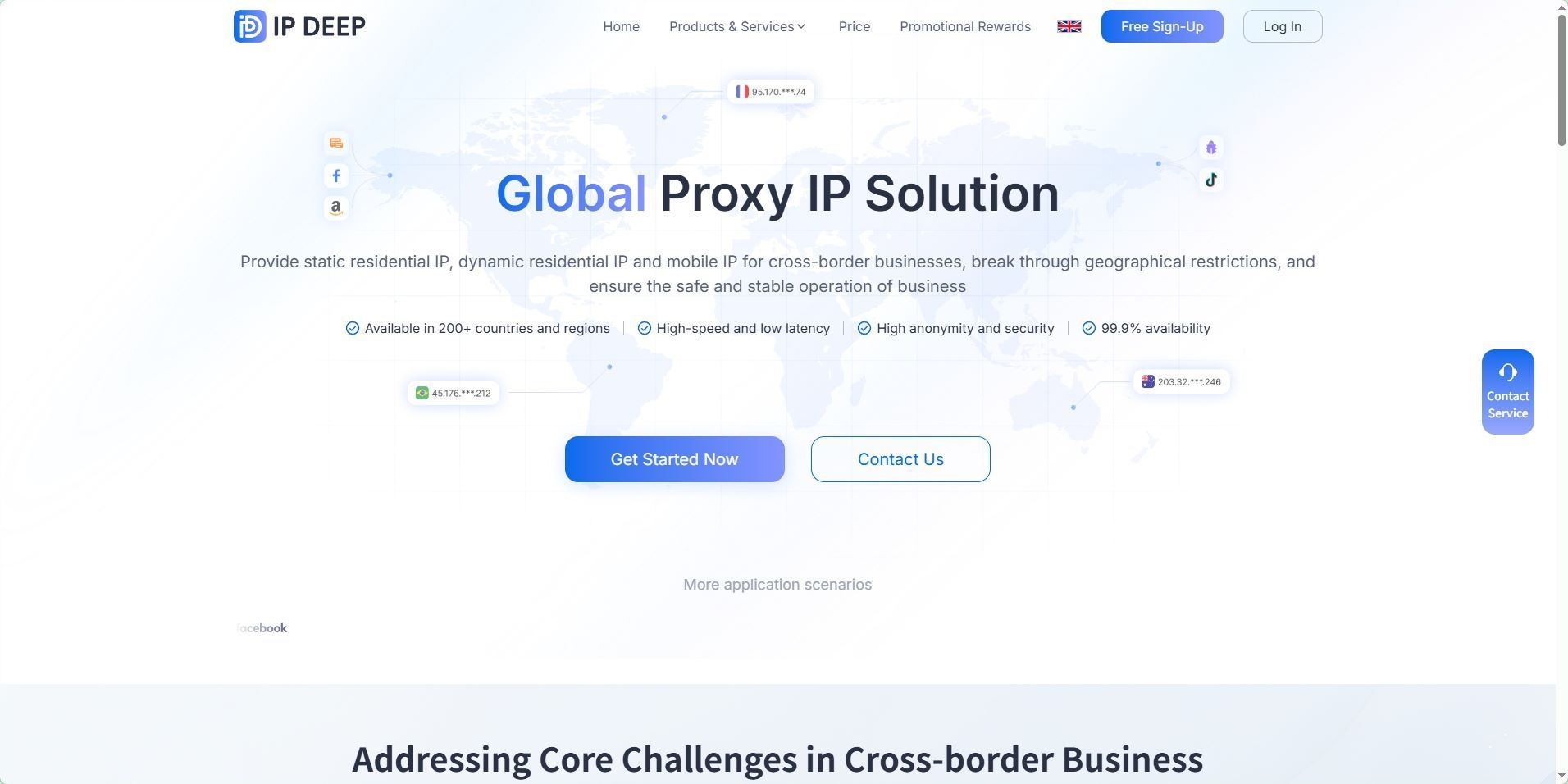
IPDeep offers rotating residential, static residential, and mobile proxies, covering more than 200 countries and regions with over 30 million IP resources.
Static residential IPs provide fixed IPs, dedicated nodes, and native residential connections, making them suitable for long-term store logins, multi-store management, social media account management, and ad verification that require a consistent network environment.
Rotating residential proxies are better suited to tasks such as competitor price tracking, inventory monitoring, and market data collection that require IP rotation.
Static residential proxies are billed per IP/month, while rotating residential proxies are billed based on traffic and bandwidth. Pricing and node availability vary by country, network route, and plan.
2. Oxylabs
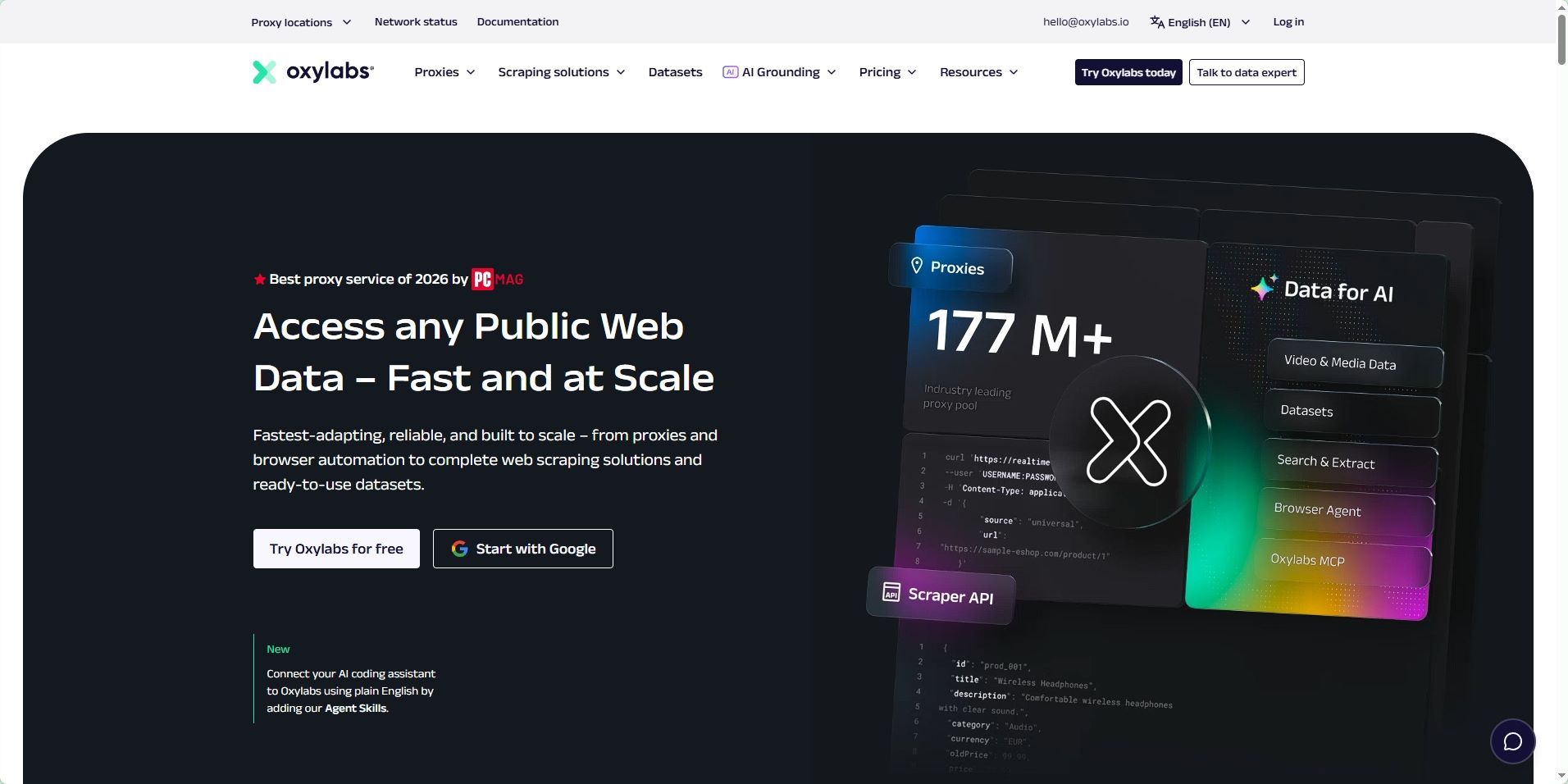
Its IP resources cover 195 countries, with city, state, and ZIP code-level targeting, unlimited concurrent sessions, and an e-commerce Scraper API.
It is suited to high-concurrency e-commerce data scraping and in-depth data extraction, with a primary focus on enterprise customers.
3. Decodo (formerly Smartproxy)
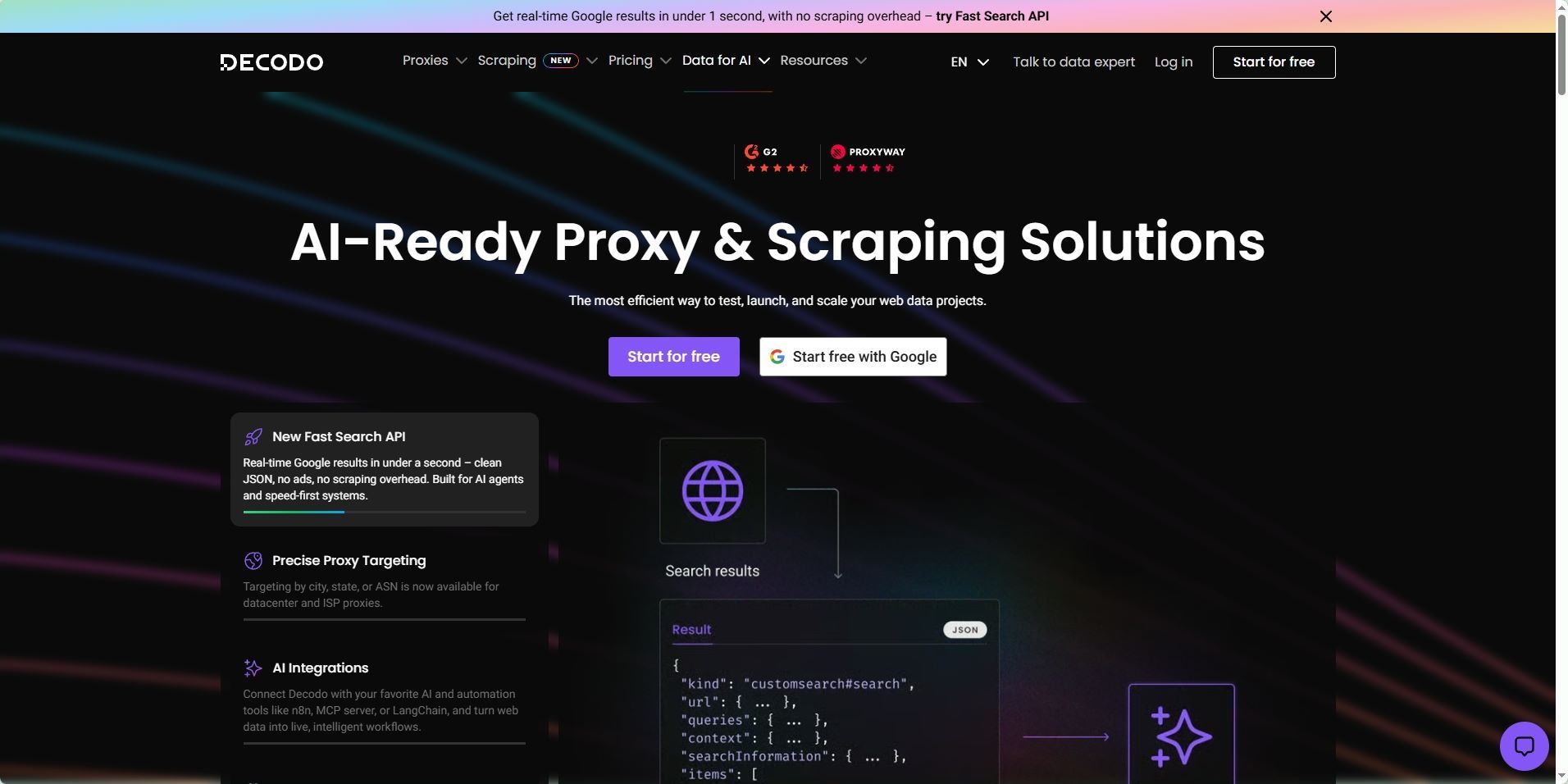
Decodo offers fast response times and an easy-to-use dashboard. Residential proxy pricing starts at $2/GB, with both pay-as-you-go and monthly plans available.
It is suitable for mid-sized teams tracking competitor prices and conducting medium-scale data collection.
4. Bright Data
It offers a large-scale residential proxy network with country, state, city, and ZIP code-level targeting. It is suitable for large enterprises, global price monitoring, and large-scale data collection.
Residential proxies are billed by traffic, with pricing varying by plan size. Larger plans offer lower per-unit rates.
5. IPRoyal
Headquartered in the UAE, IPRoyal offers more than 32 million residential IPs, supports pay-as-you-go and subscription plans, and provides non-expiring traffic.
It suits teams with limited budgets or irregular usage that need flexible pay-as-you-go options.
Comparison of 5 Proxy Providers
Different providers focus on different use cases. IPDeep's static residential IPs are well suited to cross-border store operations that require a consistent network environment over the long term.
Should You Choose Static or Rotating Residential IPs for Cross-Border E-Commerce?
Static residential IPs: Provide a long-term fixed IP and suit store backend logins, multi-store management, social media account management, and other use cases that require a persistent login environment.
Rotating residential IPs: Automatically rotate IPs by request or at set intervals. They are suitable for competitor price tracking, inventory monitoring, market data collection, and other tasks that do not require a persistent login session.
In short: choose static IPs when you need a consistent environment over the long term, and rotating IPs when you need frequent IP rotation for data collection.
Which Cross-Border E-Commerce Use Cases Is IPDeep Suitable For?
For cross-border e-commerce sellers, IPDeep's static residential IPs are suitable for use cases that require a consistent network environment over the long term, such as:
▸ Long-term store backend logins
▸ Multi-store management
▸ Ad verification
▸ Overseas market operations
▸ Social media account management
Static nodes support dedicated, native, and fixed IPs, along with SOCKS5 and HTTP(S) protocols. Most popular nodes support custom bandwidth of up to 50 Mbps.
If your main tasks involve competitor price tracking, inventory monitoring, or market data collection, you can choose rotating residential proxies and rotate IPs based on your needs.
IPDeep offers monthly static residential IPs and rotating residential proxies billed by traffic and bandwidth.
Dedicated fixed IPs can help avoid multiple accounts sharing the same exit IP over the long term, helping maintain relatively separate network environments. However, whether an account triggers verification still depends on the platform's overall risk control system.
Special offers vary by country, network route, and inventory. Check the website for currently available nodes and pricing.
Frequently Asked Questions
Q1: Should I choose static or rotating residential IPs for cross-border e-commerce?
It depends on your use case. Choose static residential IPs for store operations and account management that require a consistent login environment. Choose rotating residential IPs for large-scale data collection that requires frequent IP rotation.
Q2: Why aren't free proxies recommended for long-term cross-border e-commerce use?
Free proxies often have unpredictable IP quality, inconsistent stability, and unclear sources. For store logins, account management, and long-term data collection, free proxies are not recommended as the primary network environment.
Q3: How should I choose between IPDeep's static and rotating residential proxies?
Choose static residential IPs for multi-store operations, long-term store backend logins, social media account management, and other use cases that require a fixed environment.
Choose rotating residential proxies for competitor price tracking, inventory monitoring, and other tasks that require IP rotation.
Conclusion
There is no single proxy IP solution that fits every cross-border e-commerce use case. The key is to choose the right IP type based on your business needs.
IPDeep offers static residential and rotating residential proxies for different needs, including store operations, market research, and data collection.
To learn more about IPDeep's static residential and rotating residential proxy solutions, visit the IPDeep website to check current nodes, pricing, and available configurations.