




How to Choose High-Speed Korean Residential IPs for Gaming?



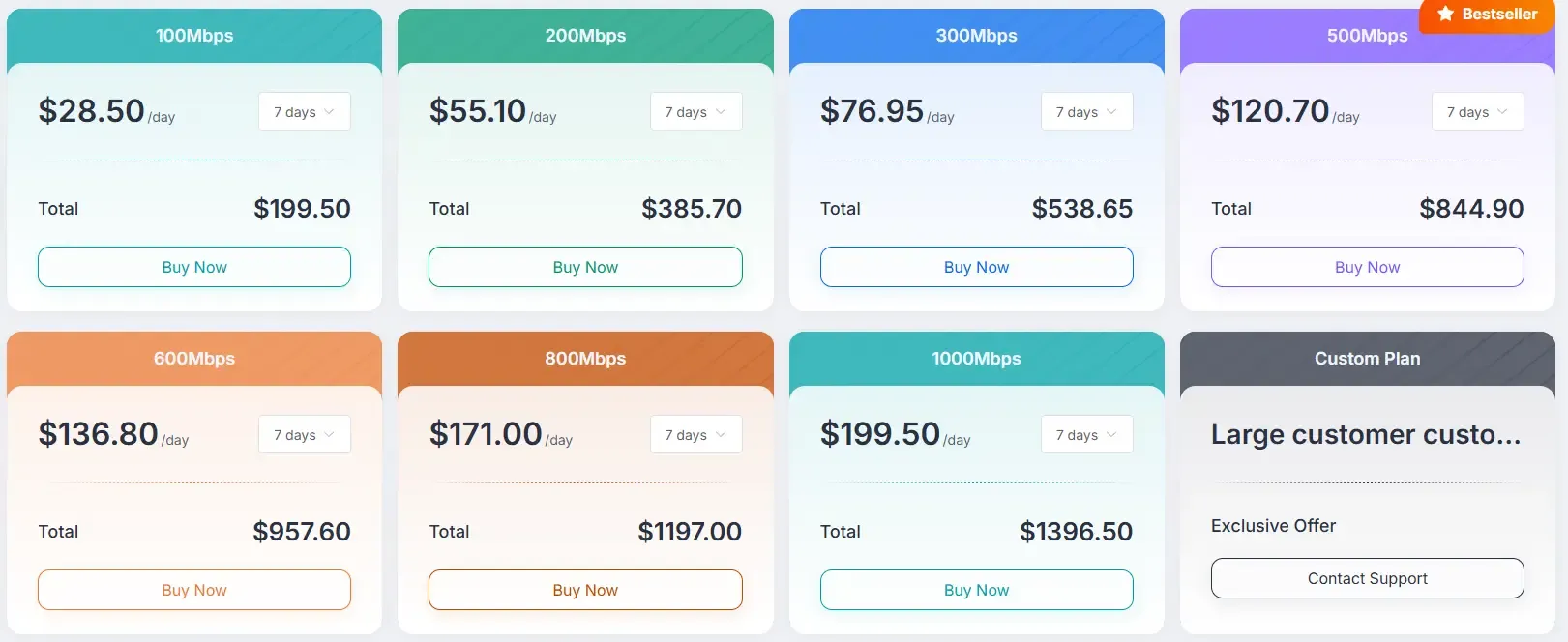
Clean IP picks: Static IPs from $1.5 each, Dynamic IPs from $0.5/GB


Whether you are pursuing a more challenging competitive environment in League of Legends or seeking to experience the latest updates in Dungeon & Fighter (DNF), network stability and account security remain two unavoidable challenges.
In practice, however, the high latency, frequent disconnections, and batch bans encountered by many are essentially caused by suboptimal network routing or "impure" IP attributes.
Consequently, selecting a native residential IP capable of simulating the online environment of a real South Korean user has become the technical threshold for entering the Korean gaming market.
This article will delve into the underlying network logic of Korean games, teaching you how to filter for truly suitable high-speed Korea residential IPs based on latency stability, IP exclusivity, and ISP authority.

Why are Korean Games so Strict About IPs?
Korean games utilize IP detection and real-name verification to ensure account security and prevent third-party software or illegal operations.
Particularities of the Korean Gaming Market
Korean gaming giants (such as Nexon and NCsoft) maintain rigorous control over in-game economies, employing advanced IP detection technology to combat cheating and gold farming.
Beyond KSSN (Korean Social Security Number) verification and device fingerprinting, systems analyze the specific attributes of the login IP.
Analysis of Ban Pain Points:
Common VPNs or game boosters often use Data Center IPs. These IP pools are frequently blacklisted and easily identified as "non-natural users," leading to trade restrictions or permanent account bans.
· IP attributes directly impact the security level of an account.
Residential IPs, originating from real home networks, possess much higher trust scores than data center IPs and are the core of account stability.
What is a True Native Korean Residential IP?
A true Korean residential IP is a genuine address assigned by a local ISP to a home user, where the registered location matches the actual physical location.
Distinguishing Korean IP Sources
· Data Center IP (Datacenter):
Generated by data centers and commonly used for hosting services. They have distinct signatures and are easily flagged by game firewalls as bots or proxy tools.
· Residential IP (Residential):
Assigned by local Korean ISPs to ordinary households. In the eyes of the system, they are indistinguishable from real Korean players.
The Definition of "Native"
This refers to the IP's registration location, broadcast location, and the physical location of the server being perfectly consistent. Such IPs have clean Whois information that accurately points to South Korea.
Gaming Performance
They perfectly simulate the online environment of a real Korean player, effectively avoiding "guilt-by-association" mass bans targeted at proxy nodes.
How to Choose High-Speed Korean Residential IPs?
To select a high-speed residential IP, you must focus on core metrics such as latency, exclusivity, and ISP hierarchy.
Network Latency (Ping) and Stability
The data transmission path determines the latency. The ideal path should be: Local Network → Optimized Line → Korean Residential IP → Game Server.
Recommended Value: For Korean games, it is recommended that the Ping from the proxy server to the game target remains within 10ms to ensure real-time responsiveness.
IP Exclusivity (Dedicated vs. Shared)
Risks of Shared IPs: If another user on a public node violates rules, all accounts under that IP may be penalized (the "one spoils all" effect).
Advantages of Dedicated IPs: Achieving a "1 IP to 1 Account" ratio builds an independent security firewall for the account, ideal for long-term operation and account nurturing.
ASN (Autonomous System Number) Weights
Priority should be given to IPs from the "Big Three" Korean ISPs: KT, SK Broadband, and LG U+. Their network infrastructure is the most robust, and their routing is the most stable.
Avoid IPs from small or low-reputation network hosting providers, as their IPs are more likely to be flagged for commercial use.
Choosing Between Dynamic and Static
Static Residential IP: The IP remains fixed, suitable for long-term account growth, gold farming, and competitive games requiring extreme environment stability.
Dynamic Residential IP: The IP changes periodically, suitable for batch registrations or initial operations requiring simulation of users in different locations.
How to Verify if Your Purchased IP is Qualified?
You can judge whether an IP meets usage standards through location detection, anonymity tests, and in-game trials.
Step 1: Basic Location Detection
Use Whois or IP lookup tools to verify if the provider belongs to the aforementioned local Korean ISPs (like KT or SK).
Step 2: Anonymity and Fraud Score Testing
Check if the IP is flagged as a Proxy or VPN. High-quality residential IPs should display as Highly Anonymous (Elite) with a low fraud score.
Step 3: In-Game Practical Test
Observe if the login process triggers frequent verification and whether there is packet loss, stuttering, or disconnection during gameplay or competitive matches.
Environmental Setup: What Else Do You Need Besides a Great IP?
Besides the IP, you need fingerprint isolation, remote DNS, and system environment consistency to safeguard your account.
Fingerprint Browsers / Isolated Environments
If operating multiple accounts, you must use a fingerprint browser to prevent account correlation caused by browser characteristics, cache, or Canvas fingerprinting.
Remote DNS Resolution
Configure remote DNS resolution to prevent local DNS leaks that could expose your true geographic location, causing location data discrepancies.
System Environment Consistency
Ensure that the client's time zone and language settings are consistent with the geographic location of the Korean residential IP.
Frequently Asked Questions (FAQ)
1. Does using a residential IP guarantee 100% protection against bans?
A residential IP is a powerful shield, but not a magic bullet. Game publishers also analyze player behavior patterns (such as scripted movement paths) to determine violations.
2. Why are residential IPs usually more expensive than game boosters?
Residential IP resources are scarce and involve paying for actual home bandwidth. The high reputation and low ban rates they provide are incomparable to commercial-grade boosters.
3. Can mobile games use residential IPs too?
Yes. Korean mobile games (like DNF Mobile) have equally strict regional restrictions. Using a Korean residential IP allows access to restricted content and improves connection stability.
Conclusion: Letting Technology Serve the Gameplay
Choosing a high-quality IP is not just about buying a network tool; it's about purchasing insurance for your account.
For players or studios planning long-term development in the Korean server, it is recommended to start with a reputable service provider (such as IPDeep) for small-scale testing to verify stability and Ping before proceeding with full-scale deployment.